
Oct 16, 2026 · Arrentio Team
Car Rental Tokyo: Day Trips to Mt Fuji, Hakone & Kamakura
Intro
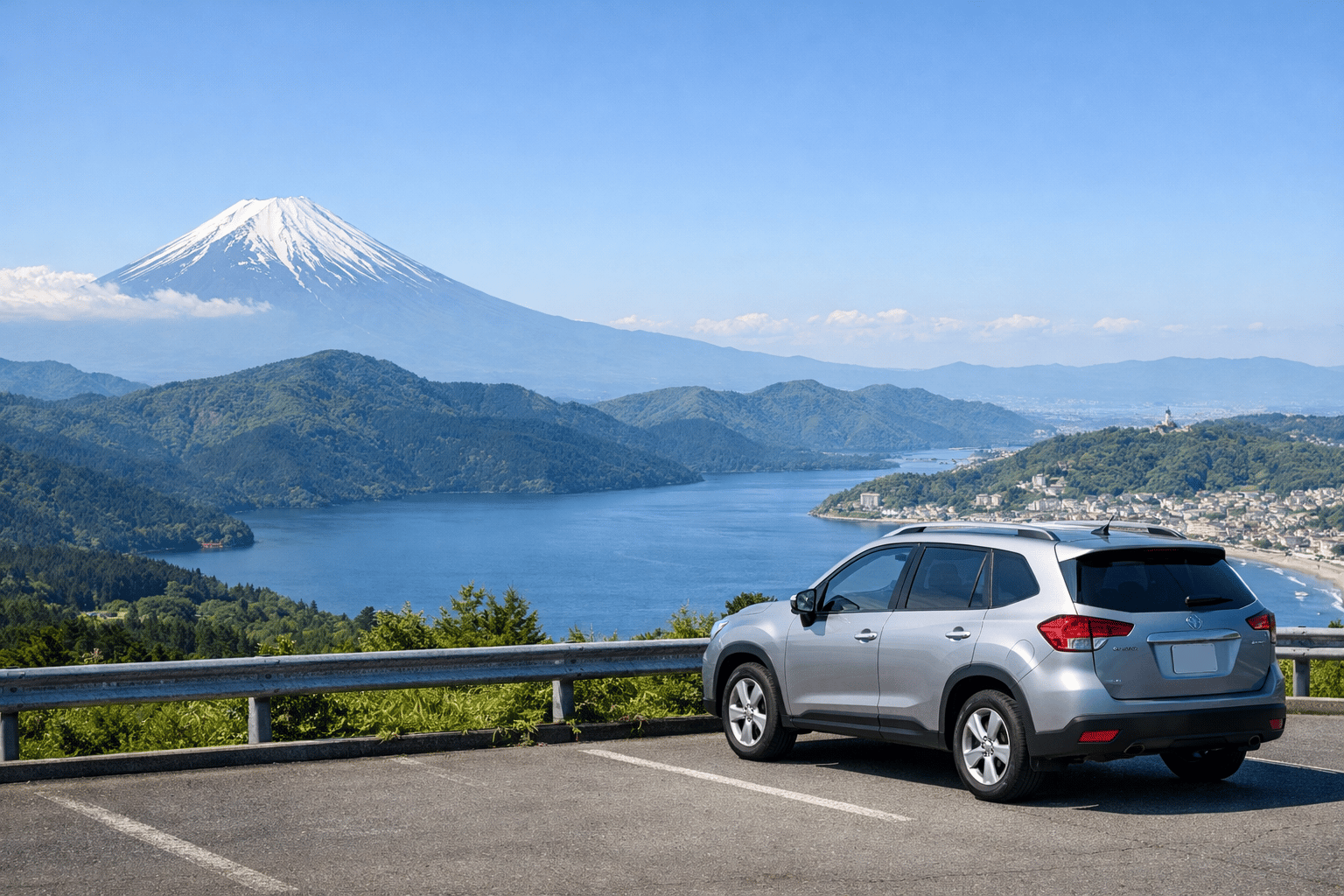
Thinking of renting a car in Tokyo for a day trip to Mt Fuji, Hakone or Kamakura? A self-drive option can give you flexibility to chase sunrise views, stop at roadside fruit stands, or reach lakeside viewpoints that are slow to access by train. Arrentio lists real cars you can book in Tokyo (you browse, compare and submit a booking request; the provider confirms it), with economy hybrids from JPY 7,000/day and larger MPVs for groups.
Is car rental Tokyo practical for day trips to Mt Fuji, Hakone, and Kamakura?
Yes — for the right itinerary. Drive times from central Tokyo are roughly:
- Kamakura: about 50–90 minutes (traffic-dependent)
- Hakone (Odawara / Hakone area): about 90–140 minutes
- Kawaguchiko / Mt Fuji area: about 120–180 minutes
These ranges assume normal traffic; expect longer times on weekends, national holidays and during cherry blossom or autumn leaf seasons. A self-drive day trip works best if you want door-to-door flexibility, will leave early (depart Tokyo before 7:30–8:00 am), or are traveling with children or a lot of luggage.
Practical notes:
- Left-hand driving — Japan drives on the left. If you haven’t driven left-side traffic recently, plan a short practice run in the city or quiet streets before you hit the expressway.
- Toll roads — using expressways shortens travel time; an ETC card speeds toll payment. Check with the provider whether an ETC-equipped car and card are available.
- Parking — popular scenic spots and stations can have limited and often paid parking. Allocate time to find parking and check opening hours for public lots.
Which car should I rent for a Tokyo day trip to Mt Fuji or Hakone?
Pick based on passengers, luggage and road type. Arrentio currently lists several Tokyo cars from the local provider smiledriverental — examples include:
- Economy / hybrid options from JPY 7,000/day: Toyota Aqua, Toyota Prius and Toyota Yaris. These are fuel-efficient, good for 1–3 people with light luggage and city-to-highway driving.
- 7-seat MPVs from JPY 12,000/day–JPY 18,000/day: Toyota Noah (JPY 12,000/day) and Toyota Alphard (JPY 18,000/day) are better if you have a family or extra bags.
- If you want something sporty for the drive itself, consider the Toyota GR86 (JPY 19,000/day).
Why these choices matter:
- Hybrids like the Prius and Aqua are ideal if your plan includes long highway sections or heavy traffic — better fuel economy reduces stops.
- MPVs make sense when you need child seats or space for coolers, picnic gear and more than two suitcases.
- Check the listing details: smiledriverental’s Tokyo cars currently show no deposit and pickup/return at the rental location — if you need airport or hotel delivery, contact the provider before booking.
How do I pick up, drive, and return a rental car in Tokyo?
Checklist before you go:
- Documentation: Japan accepts International Driving Permits issued under the 1949 Geneva Convention; some countries’ licences need an official Japanese translation (JAF provides translations for certain countries). Check your home-country rules and the provider’s requirements before booking.
- Confirm pickup details: many Arrentio Tokyo listings show “Pick up and return at our rental location.” Plan how you’ll reach the rental office from Haneda or Narita (train + short taxi, airport limousine, or local transit) and allow enough time for check-in.
- Navigation: request a car with an English GPS or use your phone with offline maps. Confirm whether the provider allows mounting a navigation device or using your phone.
- ETC card and tolls: ask the provider if an ETC card is available; it speeds toll payments on expressways.
- Parking and fees: bring cash and a card for parking; many public lots accept cards but some smaller lots are cash-only. Look up parking lots near your destination in advance.
- Fuel policy: check the vehicle’s fuel policy on the booking page so you know whether to return the car with a full tank.
On the road tips:
- Leave early to avoid Tokyo rush hour (weekday morning and evening) and weekend outbound congestion.
- Mountain roads around Hakone and Mt Fuji can be narrow and winding — drive at a comfortable speed and watch for sightseeing buses and bicycles.
- Expect checkpoints at some scenic parking areas and trailheads; read local signage carefully.
Before you return:
- Top up fuel if required by the rental terms.
- Allow time for cleaning or inspection at the rental location; many providers ask renters to return at the agreed time to avoid late fees.
- Keep receipts for tolls and parking in case you need to claim expenses.
Useful routes and timing (sample day plans)
- Kamakura morning: Leave Tokyo 07:00–08:00 — arrive by 09:00; visit Tsurugaoka Hachimangu, Hasedera and the Great Buddha; return by early evening.
- Hakone loop: Leave Tokyo 06:30–07:30 — drive to Hakone (90–140 minutes), use the Hakone Free Pass options for ropeways and boats, and plan for traffic on the return.
- Mt Fuji viewpoints (Kawaguchiko): Leave Tokyo early (05:30–07:00) — arrive mid-morning; expect longer travel if you climb to higher stations or visit the lakeshore.
Final practical reminders
- Booking: on Arrentio you browse, compare and submit a booking request; the provider confirms it. If you need airport delivery or child seats, message the provider before sending a request.
- Weather: mountain weather changes fast — bring layers and check local forecasts.
- Local rules: always follow posted speed limits and parking regulations; if in doubt, ask the provider or check local tourist information.
Ready to compare cars and plan your route? Start by browsing available vehicles and providers for Tokyo — economy hybrids from JPY 7,000/day and larger MPVs are listed now.
Book cars in Tokyo
Find the right car for your day trip and submit a booking request on Arrentio: browse cars in Tokyo. For more background on our fleet and how bookings work, see our fleet page and check common questions on our FAQ.