
Oct 16, 2026 · Arrentio Team
Tokyo Car Rental IDP: Do You Need an International Driving Permit?
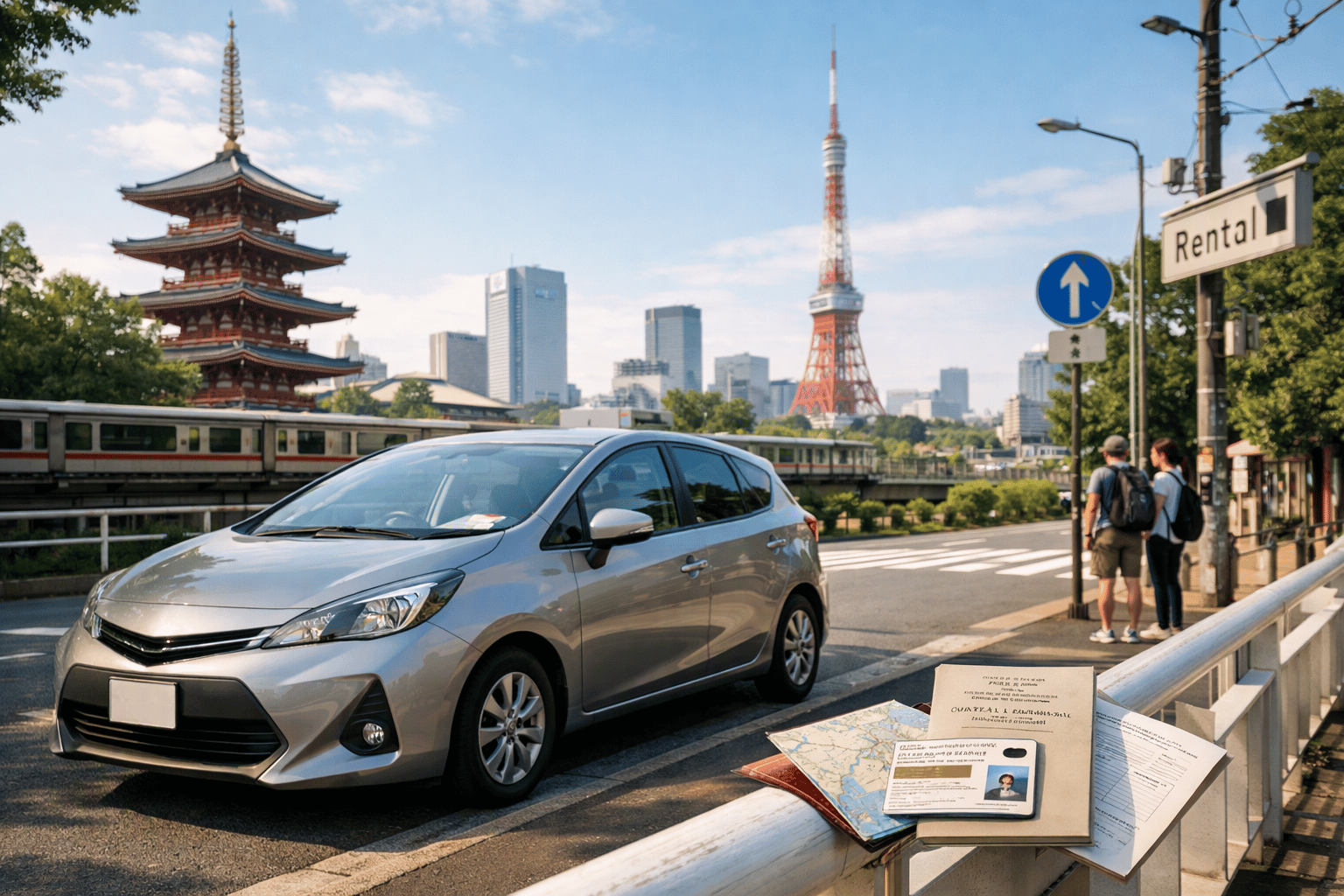
Intro
Renting a car in Tokyo can be the easiest way to reach off-the-beaten-path spots, day-trip gateways and family-friendly attractions — but first you need the right driving documents. This guide explains whether you need an International Driving Permit (IDP) or a Japanese translation, what to show at pickup, and practical tips to avoid surprises when you collect a Tokyo rental car.
Do I need an International Driving Permit for Tokyo car rental?
Short answer: usually yes — Japan accepts IDPs issued under the 1949 Geneva Convention. If your country issues a valid 1949-format IDP, bring that plus your passport and your original driving licence when you pick up the rental car. Many international travellers coming from countries that follow the 1949 convention can drive in Japan with this combination.
A few important points:
- Always check the provider’s requirements before you book. On Arrentio, car listings show pickup details and the provider’s terms — read them and attach photos of your documents to the booking request if requested.
- If your country does not issue a 1949 IDP, or if local rules differ, you may need an official translation instead (see the next section). Don’t rely on assumptions — confirm with the rental provider.
What if my licence isn’t covered by the 1949 IDP — can I use a Japanese translation?
Some national licences aren’t covered by the 1949 IDP system. In those cases, Japan accepts certain official Japanese translations of the licence instead of an IDP. The Japan Automobile Federation (JAF) provides certified translations for specific countries; other authorised bodies may be accepted in some cases.
Checklist if you think you need a translation:
- Contact JAF or your local Japanese embassy/consulate well before travel to learn whether a certified translation applies to your nationality.
- If a JAF translation is required, arrange it before arrival because it can take time.
- Confirm with your chosen rental provider that they accept the translation you have; some providers have strict rules and will not rent without the specific paperwork.
If you’re unsure, ask the rental host on Arrentio when you submit your booking request — the provider confirms the reservation and will advise what they personally require at pickup.
What documents and practical steps should I prepare before pickup?
Bring the essentials and a few extras to make pickup smooth:
- Passport (the one you used to enter Japan).
- Original driving licence (in the Latin alphabet if possible) and an IDP if your licence is covered by the 1949 convention.
- Certified JAF translation if your licence requires it.
- Booking confirmation — show the provider’s message or reservation on Arrentio.
- Credit card in the main driver’s name (many providers use this for incident holds or deposits).
- Proof of return travel or accommodation details if requested.
At the rental desk:
- Allow extra time for document checks and a short walk-through of the vehicle condition report.
- Confirm fuel policy, mileage rules, and whether the car includes an ETC card for tolls (ETC cards can save time on expressways but must be returned at drop-off).
- Ask about local parking options — Tokyo parking is expensive and often metered; your provider can point to nearby paid parking lots.
On Arrentio, most Tokyo cars show their pickup location on the car page, so check that detail before you plan an airport transfer. For example, economy options start from JPY 7,000/day — see the Toyota Aqua and the Toyota Prius, both listed by smiledriverental — and if you need more space, a 7-seater like the Toyota Noah starts from JPY 12,000/day. For a larger luxury MPV, the Toyota Alphard is listed from JPY 18,000/day (all by smiledriverental).
How long can I drive on a foreign licence — and what about long stays?
Tourist rules and acceptable documents can vary by nationality and how long you plan to stay. If you’re visiting Japan for a short trip, the IDP + passport approach is the common route. For longer stays (work, residency), you generally need to obtain a Japanese driver's licence or convert your licence under local rules — check the Japanese authorities or your embassy for up-to-date information.
If your trip borders on a longer-term stay, don’t assume tourist paperwork will suffice for an entire period. Confirm both with the rental provider and with official sources before relying on the car for multi-week travel.
Quick tips for driving in Japan as a visitor
- Drive on the left. Adjust to left-side driving in quieter areas before tackling busy expressways.
- Carry your ID documents while driving — you may need to show them if stopped.
- Toll roads (expressways) are common for quick trips: ask your provider if an ETC card is installed.
- Parking in central Tokyo is limited and costly; plan where to park in advance for sightseeing days.
- Book in advance for peak travel periods; family-size cars and larger MPVs can be popular.
Internal resources and next steps
If you want to compare available options and pickup details for cars in Tokyo, start by browsing cars in Tokyo. For general platform questions and how Arrentio bookings work, see our FAQ. If you’d like to see vehicle types and features across cities, check our fleet.
Ready to check availability in Tokyo?
When you’re ready, browse available cars, confirm each provider’s document requirements, and send a booking request — the provider will confirm your reservation. Start here: browse cars in Tokyo.